
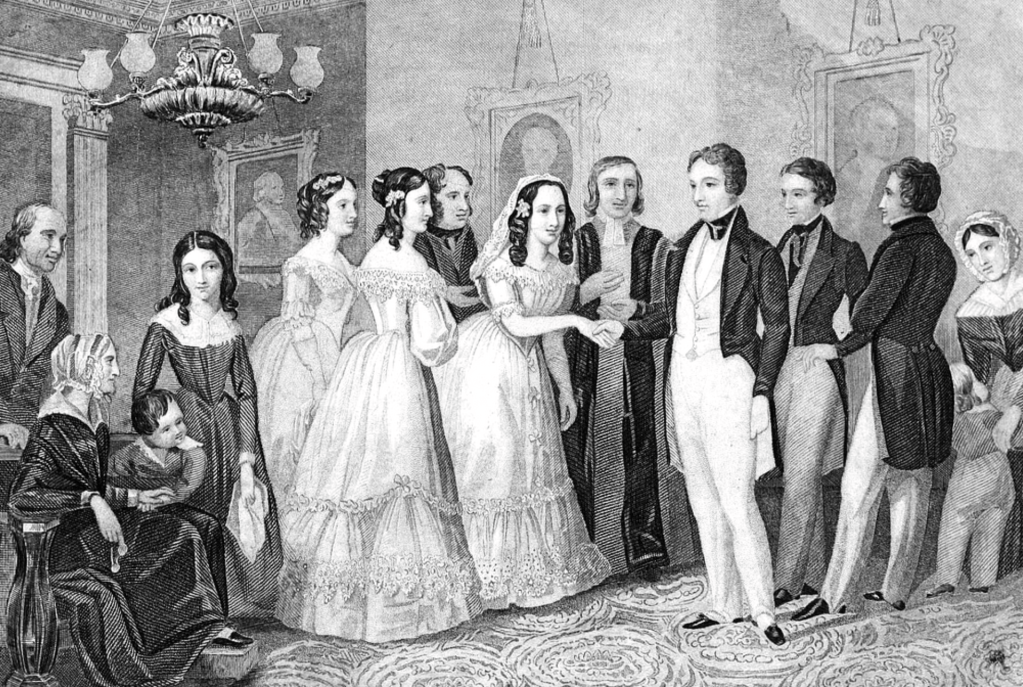
Many people are familiar with wedding traditions. Yet most people do not know where the traditions come from or why they are still incorporated today.
Common wedding traditions have diverse origins, often rooted in cultural, religious, or historical significance. Some examples of these traditions are exchanging vows, exchanging rings, walking down the aisle, cutting the cake, throwing the bouquet, and the first dance.

Exchanging Vows: The exchange of vows dates back to ancient civilizations, symbolizing the commitment between partners. The promises made during the ceremony signify love, fidelity, and partnership.
Exchanging Rings: The tradition of exchanging rings originated in ancient Egypt, where the circle symbolized eternity and the never-ending cycle of love. It became common in Western cultures during the Roman Empire and evolved into the modern practice of exchanging wedding rings as a symbol of commitment and unity.

Walking Down the Aisle: The tradition of the bride being escorted down the aisle by her father dates back to medieval Europe when marriages were often arranged, and the father would formally present his daughter to her groom.
Cutting the Cake: Ancient Romans were believed to break bread over the bride’s head for good luck and fertility. Over time, this evolved into the cutting of the wedding cake, symbolizing the couple’s first task together.
Throwing the Bouquet: In medieval Europe, it was thought that obtaining a piece of the bride’s dress or flowers would bring good luck. To escape from guests, brides would throw their bouquets and run away. Today, it’s a symbol of passing on happiness and good fortune to the next person to marry.
First Dance: The tradition of the first dance dates back to the Renaissance Era when European royalty would open balls with a grand dance. It symbolizes the couple’s first joint activity as spouses and is a moment for celebration.
These traditions have persisted over time due to their symbolic significance, cultural continuity, and the desire to honor tradition and heritage. While some couples may choose to modernize or personalize their wedding ceremonies, these traditions provide a sense of connection to the past and create a meaningful experience for both the couple and their guests.

Although wedding traditions are important, the most important wedding, tradition of all is the bride’s wedding dress.
Queen Victoria popularized the white wedding dress in the 19th century when she wore a white gown for her wedding. Before then, brides wore dresses in various colors, but white became associated with purity and innocence, and it’s one of the reasons why brides still wear white today.
Another wedding tradition that is closely related to the bride’s attire is the old rhyme “something old, something new, something borrowed, something blue”. It is a traditional English wedding custom that dates back to the Victorian era, although its exact origins are not entirely clear. Each item symbolizes a different aspect of luck and good fortune for the bride:
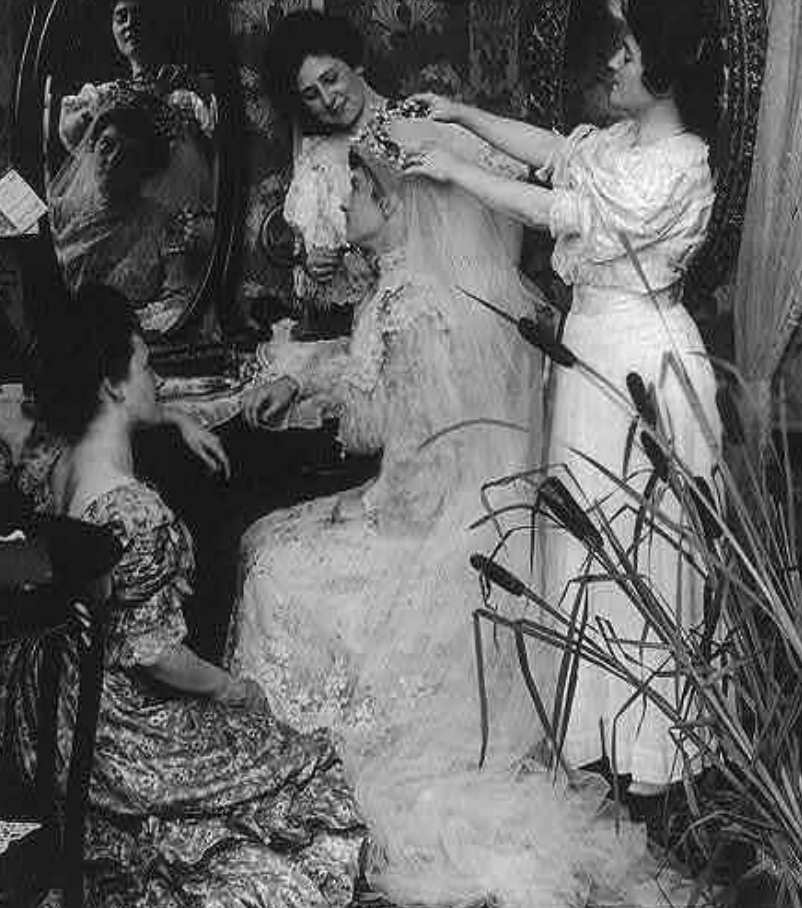
Something Old: Represents continuity with the bride’s past and her family. It’s often an heirloom piece, like jewelry or a handkerchief, passed down through generations.
Something New: Symbolizes optimism for the future and the couple’s new life together. This item can be anything the bride acquires specifically for the wedding, such as her wedding dress or shoes.
Something Borrowed: Traditionally borrowed from a happily married friend or family member, this item symbolizes borrowed happiness and good fortune. It’s believed that by borrowing something from a happily married couple, some of their marital bliss will be passed on to the bride.
Something Blue: Blue has been associated with weddings for centuries, representing purity, love, and fidelity. The blue item can be incorporated into the bride’s attire, such as a blue ribbon in her bouquet, blue jewelry, or even blue shoes.
Many of these customs are still practiced today as they add a sentimental and symbolic touch to the bride’s attire, connecting her to her past, her loved ones, and the hopeful future with her partner. While some brides may choose to follow the tradition closely, others may reinterpret it in creative ways to reflect their style and preferences. Overall, these charming traditions add depth and meaning to the wedding day.
Many of these wedding traditions have a deep personal meaning to the bride and her family. But many of these traditions have also been changed and modernized. it all depends on the couple and what they want their special day to look like. At the end of the day what matters is a wedding is celebrating the love with friends and family.
 fashionpastforward.com