
Challis

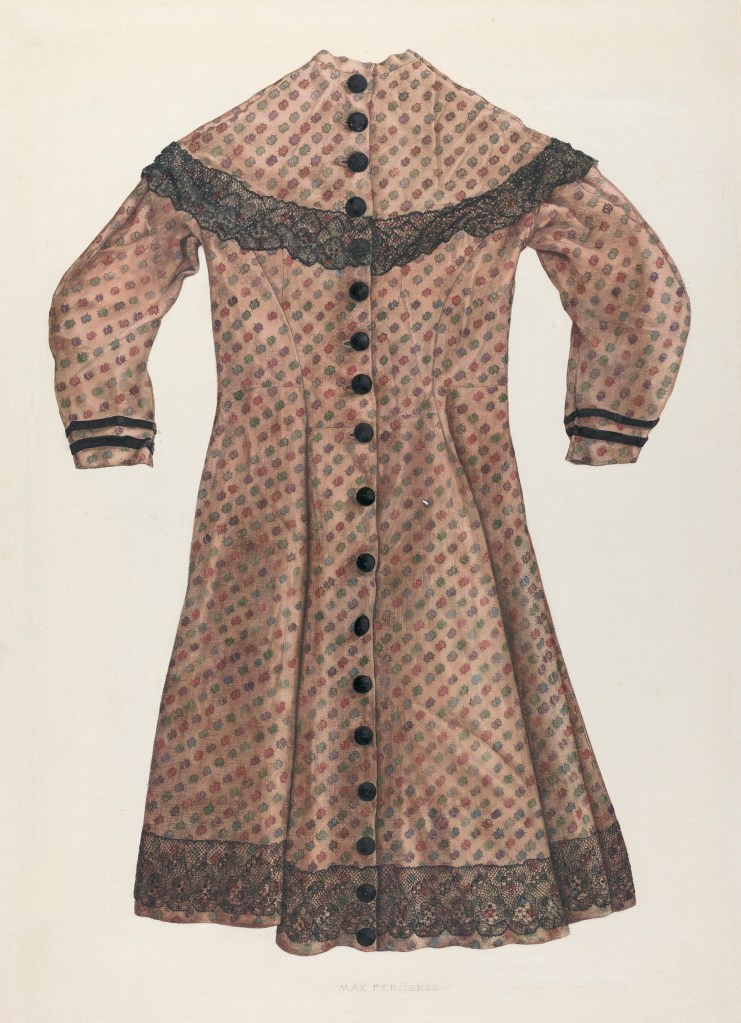
This luxurious fabric was a popular choice for designers in 19th and 20th centuries. Vintage dresses, blouses and skirts can all be found made of Challis.
Liberty of London Fashions often made garments from challis fabric. The intricate floral patterns and vibrant colors of Liberty prints made them highly sought after.

French designer Paul Poiret, known for his innovative designs, frequently used challis fabric in his creations. He appreciated the fabric’s fluidity and used it to create loose, flowing silhouettes.

Madeleine Vionnet, another influential French designer, also utilized challis fabric in her designs. She was known for her bias-cut garments, and challis fabric worked well with this technique, allowing the fabric to drape beautifully on the body.
Challis fabric was favored for its versatility and comfort. It was often used to create feminine, romantic garments with delicate details.
Vintage garments to look for that may be made from challis fabric include:
• Dresses: Challis fabric was commonly used for dresses, especially those with flowing skirts and soft draping. Look for vintage dresses with intricate prints or delicate floral patterns.
• Blouses: Challis blouses were popular during the early 20th century. They often featured ruffled details, lace inserts, or pintucks, adding a touch of femininity to the garment.
• Skirts: Challis skirts were typically lightweight and comfortable to wear. Look for vintage skirts with pleats or gathers, as these details were commonly seen in challis fabric.
If you are lucky enough to find vintage garments in this popular fabric it is essential to handle them with care to preserve their delicate nature. Here are some tips:
• Handwashing: It is recommended to handwash challis garments using a gentle detergent. Fill a basin with lukewarm water and a small amount of detergent. Gently agitate the garment in the water, then rinse thoroughly.
• Drying: After washing, carefully squeeze out excess water without wringing or twisting the fabric. Lay the garment flat on a clean towel and reshape it to its original form. Allow it to air dry away from direct sunlight.
• Ironing: If necessary, iron the challis garment on a low heat setting. Place a clean cloth or pressing cloth between the iron and the fabric to protect it from direct heat. Avoid using steam, as it can damage the delicate fibers.
• Storage: Store vintage challis garments in a cool, dry place away from direct sunlight. Avoid hanging them, as the weight of the fabric can cause stretching. Instead, fold them carefully and place them in a clean, breathable storage container.
By understanding the historical significance of challis fabric and knowing how to care for vintage garments made from it, you can appreciate and preserve these unique pieces of fashion history.
 fashionpastforward.com