
Uncategorized

Elsa Schiaparelli: Challenging Traditional Fashion Norms

This American fashion designer was known for her innovative and surreal designs. Elsa Schiaparelli was born on September 10, 1890 in Rome, Italy. Her uncle, the famous astronomer Giovanni Schiaparelli, grew up in a privileged family and had a sheltered upbringing. But, he inspired her to become an artist. From there, her creative spark began to ignite.

Schiaparelli had an unconventional start to her fashion career. She initially pursued a career in philosophy but later moved to London and began working as a translator. Her introduction to the world of fashion happened when she moved to Paris in the 1920s. There, she started designing knitwear, known for its vibrant colors and unusual patterns. Her success in this niche market eventually led her to open her boutique in Paris in 1927.

Schiaparelli had an enormous impact on the fashion industry. One example is her unique designs. She collaborated with artists like Salvador Dalí, to help make her surrealist designs. This gave her work a whimsical and imaginative look. She also experimented with new fabrics and materials, introducing innovative textiles like cellophane and rayon. She was also famous for designing bold and eccentric accessories, such as oversized jewelry and gloves with decorative zippers. This new take on fashion accessories made her famous for pushing the boundaries of conventional fashion. She popularized the use of zippers in clothing which was a bold fashion choice at the time. She even introduced wrap dresses and created designs that were more functional and comfortable. Lastly, She became one of the leading figures in the haute couture scene in Paris, known for her avant-garde designs and impeccable craftsmanship.

Elsa Schiaparelli became famous for blending elements of surreal creativity, and innovation. Her designs challenged traditional fashion norms, and her legacy continues to influence contemporary designers today.
Uncategorized

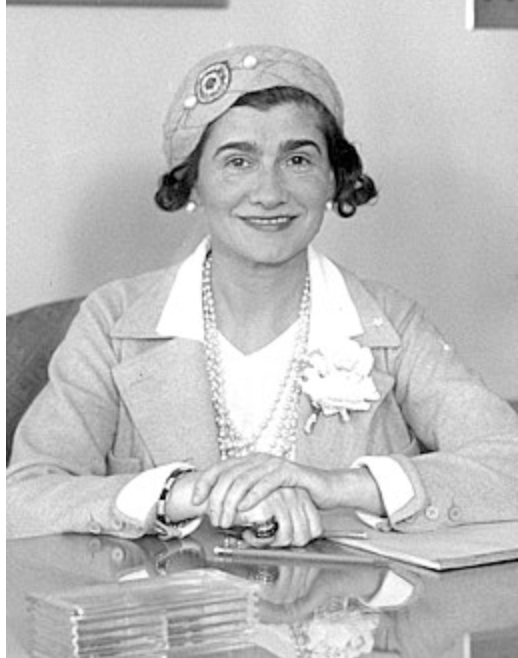
Coco Chanel: A Revolutionary Fashion Designer

Coco Chanel in Los Angeles, 1931 (cropped)” by
Los Angeles Times is licensed under CC BY 4.0

This American fashion designer’s impact on the fashion industry was so profound that people still use her designs today. Coco Chanel was born Gabrielle Bonheur Chanel on August 19, 1883, in Saumur, France. She had a challenging upbringing because she was born into an impoverished family. After her mother’s death, her father left her and her siblings in an orphanage. There she learned to sew, which sparked her interest in fashion.

Her life and career were marked by remarkable achievements and influence. In her early 20s, she started working as a seamstress and hat-maker. It was there that she was given the name Coco. Her simple practical designs caught the attention of wealthy clients, and she opened her first boutique in 1910. She initially began selling hats, but as her skills improved, she became known for selling clothing.

Chanel is considered a legendary figure in the fashion industry. She championed comfortable, yet stylish clothing, challenging the corsets and restrictive attire of the early 20th century by creating the famous “Chanel Suit” which pioneered the concept of a relaxed and elegant suit for women. Chanel also revolutionized fashion by creating the “Little Black Dress,” in 1926, a timeless and versatile wardrobe staple that never goes out of style. She utilized jersey fabric, traditionally used for men’s undergarments, in her designs. She also introduced iconic accessories, such as the quilted handbag with a chain strap.

Chanel’s impact on the fashion world changed women’s fashion by giving them more comfortable and liberating options. Her legacy continues to influence designers and fashion trends. The Chanel brand remains a symbol of timeless style and luxury even today.

Uncategorized

Pioneering American Fashion Designer Claire McCardell

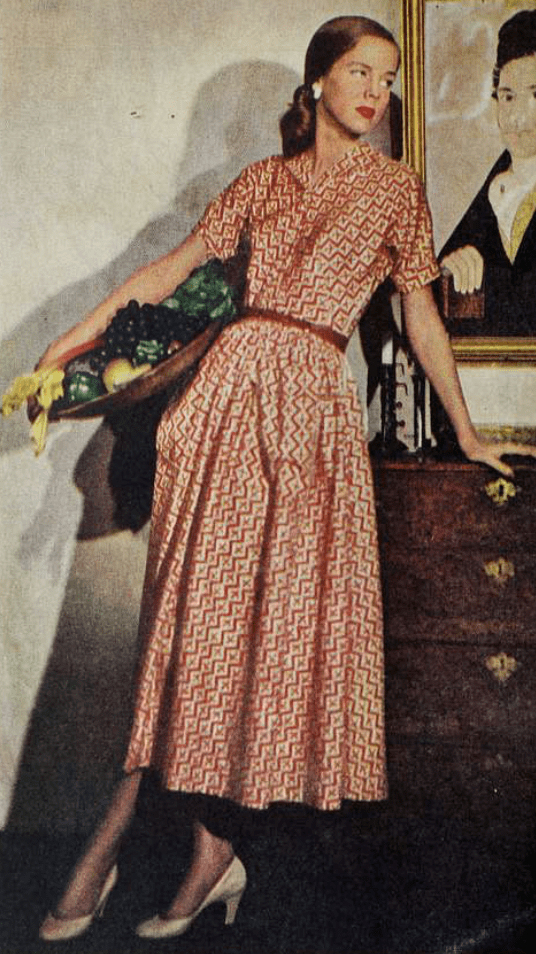
This American fashion designer pioneered the industry with her innovative designs and her passion for fashion. Claire McCardell was born on May 24, 1905, in Frederick, Maryland. Her mother, a dressmaker, played a significant role in nurturing her interest and encouraging her creativity. McCardell’s childhood exposure to her mother’s work inspired her future career in the fashion industry. After completing her education at Hood College, in Maryland, McCardell moved to New York City in the late 1920s to pursue her dream of becoming a fashion designer.

She enrolled at the Parsons School of Design where she honed her skills as a fashion designer. McCardell’s early career was marked by her work as a model and assistant designer for Robert Turk. This experience gave her valuable insight into the fashion industry. It even gave her a chance to refine her aesthetic as a designer. In 1931, McCardell joined the prestigious Townley Frocks, a leading fashion house known for its innovative designs. During this time, she became famous for creating stylish yet practical designs, that catered to modern women. Claire Mcardell was important to the fashion industry because she pioneered the concept of the “American Look”. Emphasizing casual elegance and ease of movement. McCardell revolutionized women’s fashion, by giving women a variety of comfortable and versatile looks. McCardell’s signature designs, such as the “Popover Dress” and the “Monastic Dress,” are considered iconic pieces that epitomize her design philosophy.

Today Vintage shoppers admire her innovative design and techniques such as adjustable waistbands and hidden pockets. They also admire the functionality of her clothing as well. McCardell’s emphasis on using affordable fabrics has made her garments even more accessible to vintage shoppers. Her inactive and practical designs made her a trailblazer in the fashion world.

Uncategorized

Denim Through the Decades

Vintage T-Shirts and Jeans are highly sought after in boutiques and thrift stores. Here are key details to look for in jeans through the decades.

1920s
Jeans from this area were high-waisted jeans with a loose, straight leg. You’ll see suspender buttons or side cinch straps instead of belt loops. Trousers were made from raw, selvedge denim with minimal branding. The pants were worn for work, not for style.

1930s
In the 30’s jeans were high-rise at the waist with a wider leg. Check for cinch-backs, which were adjustable straps at the back of the waistband. You’ll see single-needle stitching and donut buttons.

1940s
From this era, jeans were mid-rise with a straight leg. Patch pockets and a button fly were the typical style. The standardized denim used at the time didn’t shrink as much as raw denim.

Photo by Pixabay on Pexels.com

1950s
In the 50’s jeans were back to high rise with a slim, tapered leg. Zippers replace the a button fly. And, the red tab on the back pocket, indicated the iconic Levi’s brand.

1960s
By the 60s low rise was the rebellion style with a slim, straight leg. A light wash with faded or distressed details were the trendy look. Levi change its logo and a small “e” on the red tab is present on jeans from the 60’s.

1970s
In this decade, jeans remain low rise but the flared leg or “bell bottom” was all the rage. Decorative stitching, embroidery, or patchwork were also popular. Jeans made in the 70’s have some stretch denim for a more fitted look.

1980s
In the 80s the style shifted back to high-rise with a straight or slightly tapered leg.
Acid-wash or stone-wash finishes were very popular during this decade.
Logo brands were prominently displayed on the back pocket.

1990s
Back in the 90’s, jeans were mid-rise with a relaxed, baggy fit. Wide legs or bootcut styles were the new trend. Distressed or ripped details were introduced by the grunge crowd.

Photo by NEOSiAM 2021 on Pexels.com

By understanding the key characteristics of jeans from each decade, you can better identify and appreciate the unique features of vintage jeans while shopping.

Uncategorized

The Colorful History of Tie-Dye

If you enjoy the hippie look of the 60s you will be familiar with this fabric-dying technique that creates vibrant and colorful patterns. But, you may not know tie-dye’s history began long before that turbulent decade.

The earliest written records of tie-dye come from China and Japan when people used natural dyes from berries, leaves, roots, and flowers to color clothing. These natural items were boiled, and the fabric was then soaked in the hot, dyed water to take on a new color.

India had their version of tie-dye too. This process involves using thread to tie off small pieces of fabric in intricate patterns before dipping the fabric in dye. This method is the most popular and is still practiced today.

Tie-dye was originally called “resist dying” but the term changed during the 60s when America’s counterculture movement adopted the technique as a way to describe binding fabric before dying. It was popular with Americans because of its simple and inexpensive way to express creativity with a free and relaxed fashion style. Hippies and other artists adopted the technique because the patterns were often inspired by hallucinogenic drugs. Tie-dye was also popular with homemakers as DIY clothing kits became more accessible. Everyone was creating their own unique tie-dye patterns. The technique was incorporated in everything from T-shirts to bedspreads and soon became a commonly used pattern for clothing and home decor. The tie-dye look, was a new, fun way to create unique and vibrant patterns, contrary to the plain business looks of the 50’s. During this decade, designers began incorporating this look into their fashion shows, and tie-dye became an iconic theme for the era.

Today, tie dye has a simple design, with splotches of dyed or bleached areas. However, there is something about the tie-dye look that keeps people coming back to it. Each tie dye pattern is unique and bold in its own way. Next time you see a tie-dye shirt, take note of the natural patterns, and eye-catching colors.

Uncategorized

Gingham A Versatile Summer Favorite

Photo by Rima on Pexels.com

Have you ever thought of adding a touch of Gingham to your wardrobe? Here is a brief history of how Gingham became a popular summer favorite. 

The Gingham we know today is usually presented in a checkered pattern of one color with white; however, the word Gingham originally referred to a striped fabric. The Dutch introduced it, traded it in England, and it soon gained worldwide popularity. 

During the early 20th century, Gingham became famous for children’s clothing. Young girls wore Gingham school uniforms, and boys wore Gingham rompers. However, during the Great Depression, Gingham soon gained popularity with adults because of its durability and low cost. Swimsuits and swim shorts were also made with the fabric, making Gingham a popular choice for beachwear. 

Celebrities also had a hand in Gingham’s popularity. Who could forget Judy Garland’s blue Gingham printed dress in “The Wizard of Oz.” Katherine Hepburn had a significant fashion moment wearing a Gingham printed dress in the hit film “The Philadelphia Story.” By the ’50s, Marilyn Monroe’s Gingham shirt, tied at the waist with jeans, became an iconic look for American women. Today, high-profile celebrities like Taylor Swift continue to make this pattern an on-the-go look. 

Photo by RDNE Stock project on Pexels.com

Gingham has multiple uses, from country tablecloths to flirty dresses. It is versatile, breathable, and comfortable. You can’t go wrong with adding Gingham to your summer wardrobe. 

Uncategorized

Graphic Tees: How It All Started

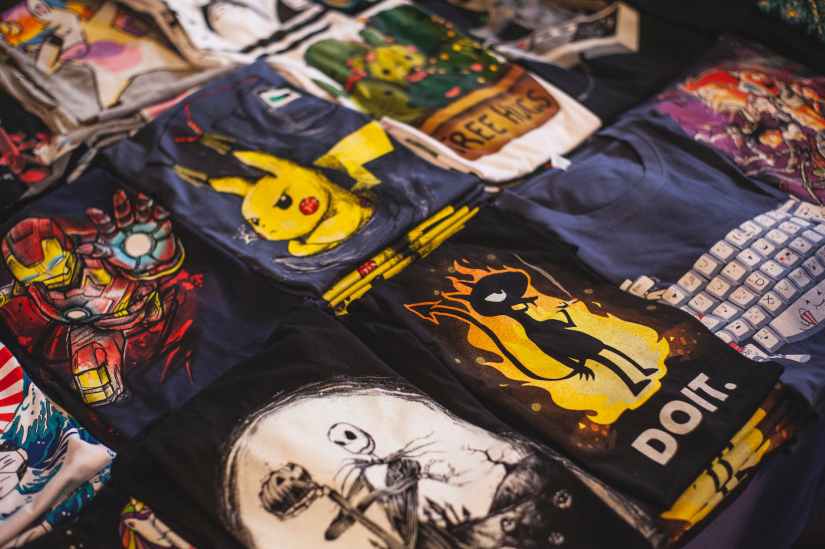
Today we explore one of the top-selling garments in thrift shops, the Graphic Tee. For decades, Graphic Tees have been used to sell merchandise and promote brands.

This popular garment made its first appearance in the movie, “The Wizard Of Oz.” If you look closely, you will spot the workers in the Emerald City factory wearing bright green T-shirts promoting the city of Oz.

Originally this type of shirt was acceptable only as undergarments and commonly referred to as “jimshirts” or “skivvies”. The term “T-shirt” was coined by author F. Scott Fitzgerald in his book, “This Side Of Paradise,” a novel he wrote in 1920.

By the 60’s and 70’s, rock bands quickly realized that branded t-shirts could both promote the band and offer a second source of income. Apparel companies also decided to jump on this trend by branding shirts and designing full lines with printed logos in full view.

Photo by Francesco Paggiaro on Pexels.com

Today Graphic Tees 20 years or older are considered vintage and highly sought after. Next time you shop at your local thrift store, purchase a Graphic Tee to keep up with this popular trend.

Uncategorized

The Rise and Fall of the Bustle

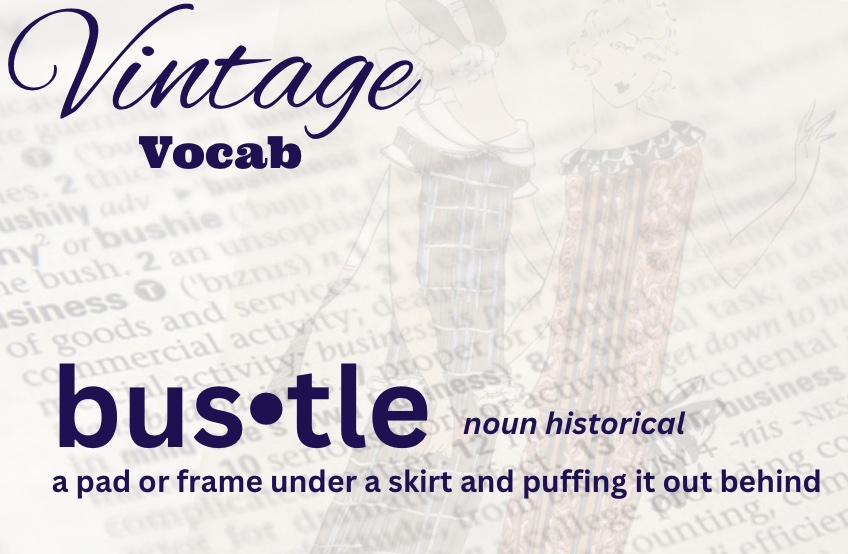
We are starting this weeks Vintage Vocab with  a term that quickly faded in and out of fashion in the Victorian era.  Bustles were popular during the late 1800’s.  Many women owned at least one and wealthy women would have owned many different styles  The three most popular categories  were the lobster-tail; the small bustle; and the bustle cushion, which was accessible to most women simply because it was the easiest to manufacture.  Bustles  were made of wicker, whalebone, and  coiled steel springs that were used as support to give the body an “S” shape. Bustles were originally Introduced in 1868 to replace the cage crinoline

In 1881, designer Charles Worth reintroduced the bustle into high fashion. The new style of  bustle of the 1880s fit closer to the body, and was smaller, lightweight and easier to walk around in. Sometimes, it was even  collapsible to allow for easy sitting. This style came in many different versions but all of them had the same goal in mind, to exaggerate the female posture. 

Overtime exaggerated body shapes were going out of style and more comfortable options were offered. Women’s skirts became simple and less restrictive. As a result, the bustle was replaced with the “A line skirt” and the corset. But was this change really for the better? Originally, corsets were introduced to give the body an attractive looking hour glass shape. But in order to achieve this, the corset would often squeeze the waist tightly in the middle which caused many health problems. Tightly laced corsets reduced lung capacity, irritated skin, and squeezed the rib cage. The corset was originally intended to give women more comfort, but actually caused more health problems.

Today, women have more freedom and choice in fashion.  Fabrics are comfortable and durable. Women now use bras as supportive undergarments, and they are much more comfortable than corsets. Even though the corset and bustle are no longer used today, it serves as a reminder of how extravagant women’s fashion used to be.

Source: metmuseum.org, refashioninghistory.com, nyamcenterforhistory.org, vam.ac.uk

Uncategorized

The Wearing of the Green

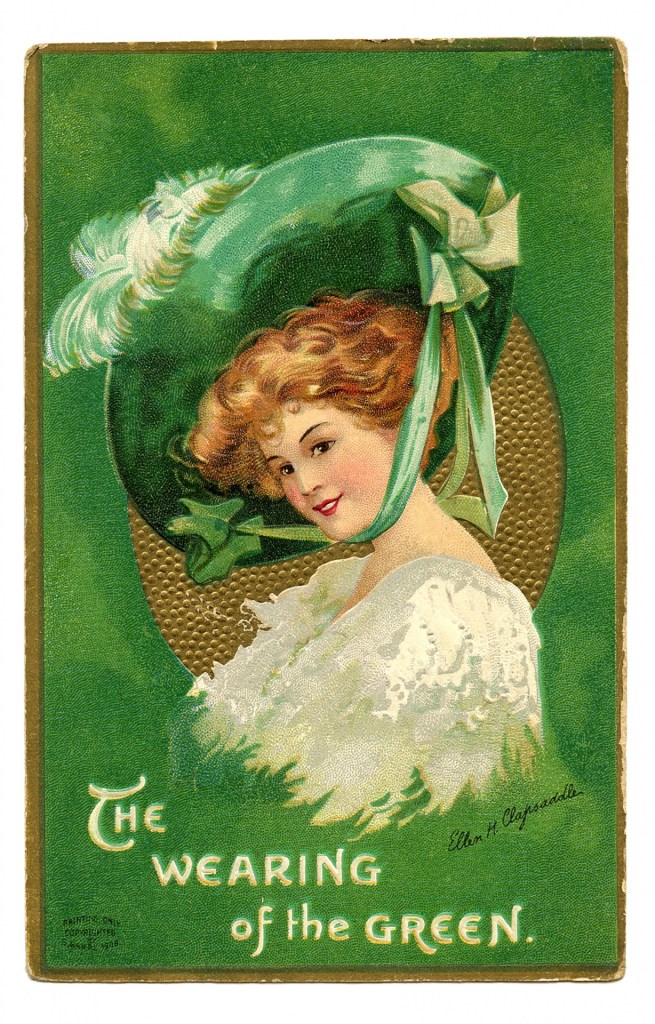
Kelly, juniper, sage, sea-foam, and emerald are familiar shades of lucky green. But, unfortunately, this bright and happy color hasn’t always been lucky, and in the fashion world, it has occasionally been considered a curse.
The unlucky charm of green is attributed to Carl Wilhelm Scheele, a late 18th-century chemist who developed a new pigment dye by mixing arsenic and potassium in a copper solution. The new shade turned the relatively rare color of green into a fashion phenomenon.
The “new” green was presented in dresses, trims, flowers, and even wallpaper. The problem, of course, was that the dye was toxic. Those who wore it, and primarily those who worked with it, became sick, blistered, and even died from the exposure. Despite its toxicity, the bright green color in various forms remained fashionable until the late 1800s.
By early 1900, after well-documented cases of injury and death due to the arsenic exposure, the color green went from fashionable to shunned and was considered “unlucky.” Even among more modern fashion houses such as Chanel, seamstresses consider the color green to be bad luck.
Long before the days of arsenic green, the color had its ups and downs throughout history. Before Queen Victoria set white as the traditional wedding gown, green was a popular choice for brides because it invoked fertility. However, Shakespearean actors in England refused to wear green on stage because it was bad luck. At the same time, Sailors banned the color aboard ships because it is believed to attract lightning.
Today, green is back on top, bringing a mostly positive and usually happy tone. Even a hint of green in accessories can bring freshness to any look. So, wear the green. Times have changed. It’s now a color of health, life and happiness.

Uncategorized

SUMMER 2023: New Content Series

Daily, well researched content. Produced and ready to post. Customized with your logo/tagline.

For more details contact avera.worrall@icloud.com

This summer FashionPastForward will produce a series of weekly theme content for Vintage Retailers.
Here’s a sneak peek of what to expect.

MONDAY • Swatch of the Week
Features the history and popular uses of fabrics, textures and patterns.


TUESDAY • Trending: Then and Now
Find out what was “Trending” way back when and is still in style today.


WEDNESDAY • Vintage Vocabulary
Learn the lingo of vintage fashion with the word of the day.


THURSDAY • Tips and Tricks
Vintage styling tips and tricks


FRIDAY • Flashback
Flashback with history making icons and events