Uncategorized

History of Prom

For many people prom is a special once in a life time event. But it also has a history that significantly evolved over the years. Here are some key ways in which prom has transformed.

History: Present-day proms are quite different than its origin. The idea of celebrating youth as a transition to adulthood dates back to ancient Greece. The formal banquets were called “symposia” and held to honor elite men. The event included lavish banquets, speeches, music and drinking. In the 18th century Proms were still reserved for men in the form of tea parties for male college students and their prominent families. By the 1930’s it reached over to high school and included men and women in their senior year under strict supervision of teachers and parents. College proms were to celebrate wealth and social status. High School proms were to teach men and women etiquette as they transition to adulthood. By the 50’s prom was “THE” event of the year especially for the senior class and included the crowning of the King and Queen.
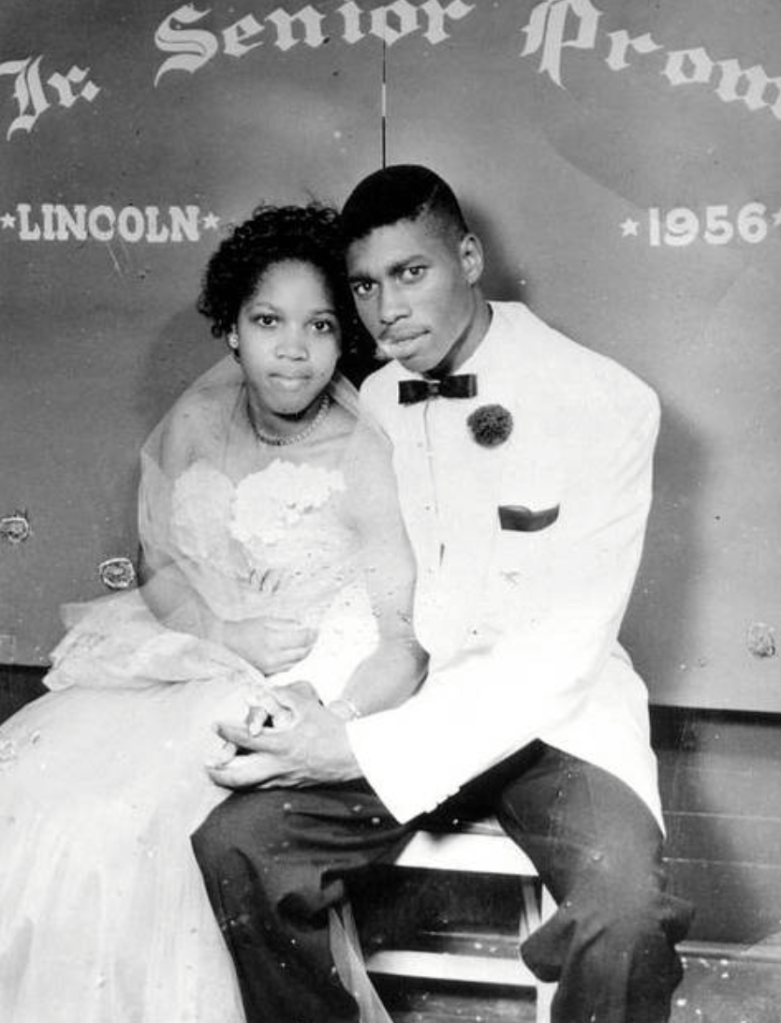
Social Significance: Prom has transitioned from a simple end-of-year dance to a highly anticipated social event, often considered a rite of passage for teenagers. It’s no longer just about the dance itself but also about the entire prom experience, including asking someone to be your date, pre-prom parties, and post-prom activities.

Diversity and Inclusion: Proms have become more inclusive, embracing diversity in terms of attendees, including students of different ethnicities, backgrounds, and gender identities. This inclusivity is reflected in the variety of prom dress styles and the acceptance of non-traditional prom attire.

Technology and Social Media: The rise of social media has transformed prom culture, with teenagers documenting and sharing every aspect of their prom experience online. From promposal videos to glamorous outfit photos, social media has become an integral part of the prom experience, shaping expectations and trends.

Cost and Extravagance: Prom has become increasingly elaborate and expensive, with some students and families investing significant time and money into prom preparations, including dresses, suits, transportation, tickets, and after-parties. This emphasis on extravagance has led to the rise of prom-related industries, including formalwear rental and event planning services. Today, proms are big business. A survey done by VISA corporation states that prom can cost upwards of $1000 per person which includes everything from tickets, dinner, attire, and after parties with the average family spending at least $350 for this one night event.

Fashion Trends: Prom dress styles have evolved over time, reflecting broader fashion trends. While certain elements like elegant ball gowns and sleek silhouettes remain timeless, the specific designs, colors, and embellishments have changed to reflect the fashion preferences of each era.

In the 1920s, flapper-style dresses with dropped waists and intricate bead-work were fashionable for proms. The 1950s saw the emergence of full-skirted dresses with cinched waists, epitomizing the glamour of that era.
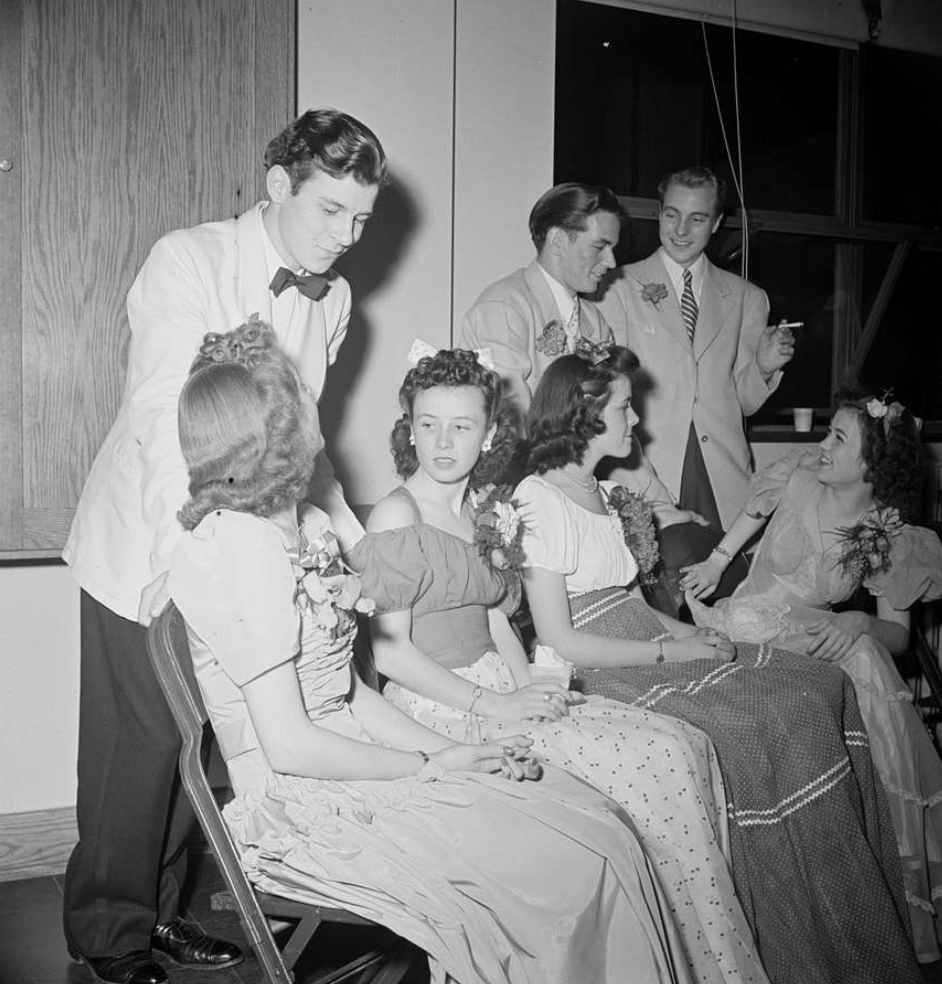
The 1960s brought more diverse styles, from mod-inspired shifts to empire-waist gowns. The 1970s embraced flowing, bohemian designs with floral patterns and peasant-style sleeves.

The 1980s ushered in a bold and extravagant era, with prom dresses featuring exaggerated silhouettes, bold colors, and plenty of sequins and ruffles.

By the 1990s and 2000s, prom dress styles varied widely, influenced by trends in mainstream fashion, including sleek slip dresses, princess ball gowns, and sleek, minimalist designs.

Today, prom dresses continue to evolve, with a mix of vintage-inspired looks, modern trends, and individualistic styles, reflecting the diverse tastes and preferences of teenagers attending prom. Overall, prom has evolved from a simple school dance to a multifaceted cultural phenomenon, reflecting the changing values, attitudes, and aspirations of each generation of teenagers.

Uncategorized

History of Wedding traditions

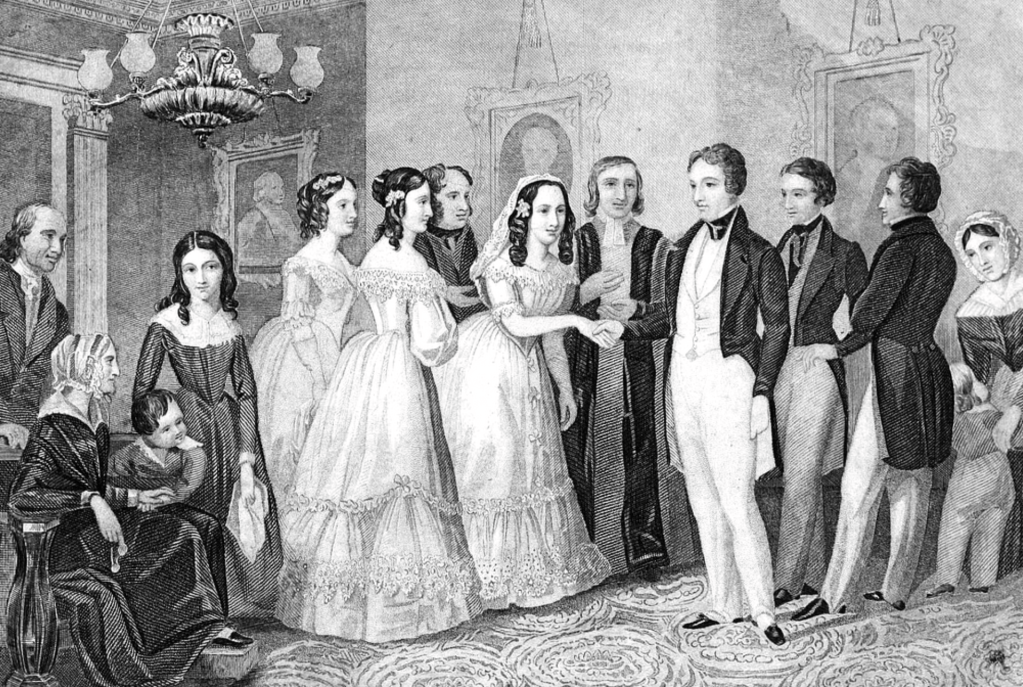
Many people are familiar with wedding traditions. Yet most people do not know where the traditions come from or why they are still incorporated today.

Common wedding traditions have diverse origins, often rooted in cultural, religious, or historical significance. Some examples of these traditions are exchanging vows, exchanging rings, walking down the aisle, cutting the cake, throwing the bouquet, and the first dance.

Exchanging Vows: The exchange of vows dates back to ancient civilizations, symbolizing the commitment between partners. The promises made during the ceremony signify love, fidelity, and partnership.

Exchanging Rings: The tradition of exchanging rings originated in ancient Egypt, where the circle symbolized eternity and the never-ending cycle of love. It became common in Western cultures during the Roman Empire and evolved into the modern practice of exchanging wedding rings as a symbol of commitment and unity.

Walking Down the Aisle: The tradition of the bride being escorted down the aisle by her father dates back to medieval Europe when marriages were often arranged, and the father would formally present his daughter to her groom.

Cutting the Cake: Ancient Romans were believed to break bread over the bride’s head for good luck and fertility. Over time, this evolved into the cutting of the wedding cake, symbolizing the couple’s first task together.

Throwing the Bouquet: In medieval Europe, it was thought that obtaining a piece of the bride’s dress or flowers would bring good luck. To escape from guests, brides would throw their bouquets and run away. Today, it’s a symbol of passing on happiness and good fortune to the next person to marry.

First Dance: The tradition of the first dance dates back to the Renaissance Era when European royalty would open balls with a grand dance. It symbolizes the couple’s first joint activity as spouses and is a moment for celebration.
These traditions have persisted over time due to their symbolic significance, cultural continuity, and the desire to honor tradition and heritage. While some couples may choose to modernize or personalize their wedding ceremonies, these traditions provide a sense of connection to the past and create a meaningful experience for both the couple and their guests.

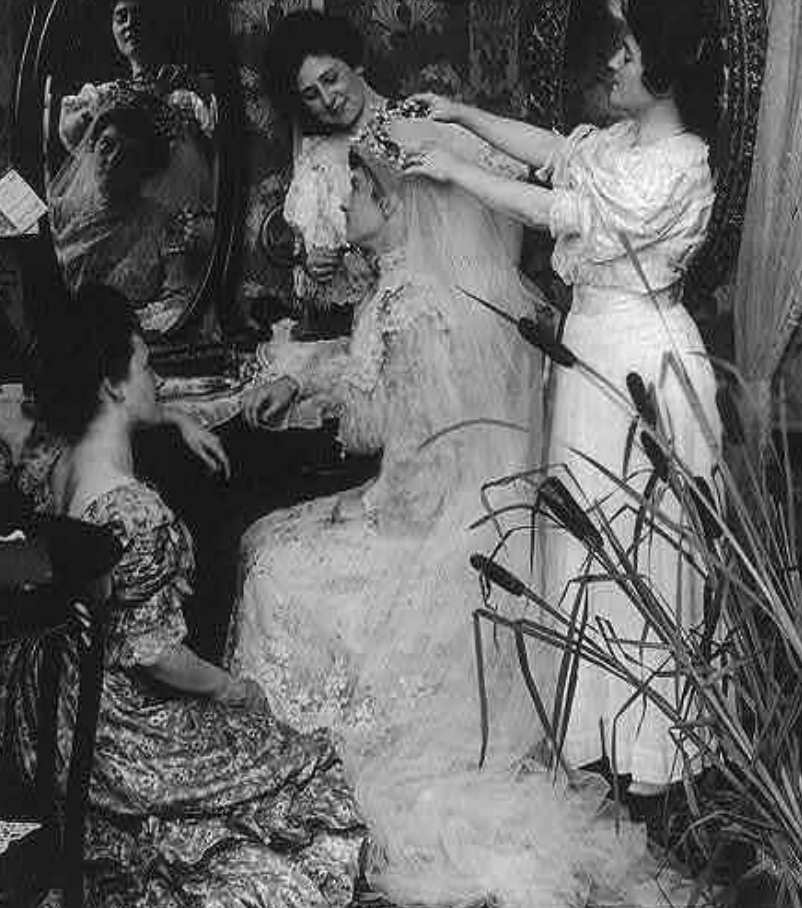
Although wedding traditions are important, the most important wedding, tradition of all is the bride’s wedding dress. 
Queen Victoria popularized the white wedding dress in the 19th century when she wore a white gown for her wedding. Before then, brides wore dresses in various colors, but white became associated with purity and innocence, and it’s one of the reasons why brides still wear white today.

Another wedding tradition that is closely related to the bride’s attire is the old rhyme “something old, something new, something borrowed, something blue”. It is a traditional English wedding custom that dates back to the Victorian era, although its exact origins are not entirely clear. Each item symbolizes a different aspect of luck and good fortune for the bride:

Something Old: Represents continuity with the bride’s past and her family. It’s often an heirloom piece, like jewelry or a handkerchief, passed down through generations.

Something New: Symbolizes optimism for the future and the couple’s new life together. This item can be anything the bride acquires specifically for the wedding, such as her wedding dress or shoes.

Something Borrowed: Traditionally borrowed from a happily married friend or family member, this item symbolizes borrowed happiness and good fortune. It’s believed that by borrowing something from a happily married couple, some of their marital bliss will be passed on to the bride.

Something Blue: Blue has been associated with weddings for centuries, representing purity, love, and fidelity. The blue item can be incorporated into the bride’s attire, such as a blue ribbon in her bouquet, blue jewelry, or even blue shoes.

Many of these customs are still practiced today as they add a sentimental and symbolic touch to the bride’s attire, connecting her to her past, her loved ones, and the hopeful future with her partner. While some brides may choose to follow the tradition closely, others may reinterpret it in creative ways to reflect their style and preferences. Overall, these charming traditions add depth and meaning to the wedding day.

Many of these wedding traditions have a deep personal meaning to the bride and her family. But many of these traditions have also been changed and modernized. it all depends on the couple and what they want their special day to look like. At the end of the day what matters is a wedding is celebrating the love with friends and family.

Uncategorized

Denim Through the Decades

Vintage T-Shirts and Jeans are highly sought after in boutiques and thrift stores. Here are key details to look for in jeans through the decades.

1920s
Jeans from this area were high-waisted jeans with a loose, straight leg. You’ll see suspender buttons or side cinch straps instead of belt loops. Trousers were made from raw, selvedge denim with minimal branding. The pants were worn for work, not for style.

1930s
In the 30’s jeans were high-rise at the waist with a wider leg. Check for cinch-backs, which were adjustable straps at the back of the waistband. You’ll see single-needle stitching and donut buttons.

1940s
From this era, jeans were mid-rise with a straight leg. Patch pockets and a button fly were the typical style. The standardized denim used at the time didn’t shrink as much as raw denim.

Photo by Pixabay on Pexels.com

1950s
In the 50’s jeans were back to high rise with a slim, tapered leg. Zippers replace the a button fly. And, the red tab on the back pocket, indicated the iconic Levi’s brand.

1960s
By the 60s low rise was the rebellion style with a slim, straight leg. A light wash with faded or distressed details were the trendy look. Levi change its logo and a small “e” on the red tab is present on jeans from the 60’s.

1970s
In this decade, jeans remain low rise but the flared leg or “bell bottom” was all the rage. Decorative stitching, embroidery, or patchwork were also popular. Jeans made in the 70’s have some stretch denim for a more fitted look.

1980s
In the 80s the style shifted back to high-rise with a straight or slightly tapered leg.
Acid-wash or stone-wash finishes were very popular during this decade.
Logo brands were prominently displayed on the back pocket.

1990s
Back in the 90’s, jeans were mid-rise with a relaxed, baggy fit. Wide legs or bootcut styles were the new trend. Distressed or ripped details were introduced by the grunge crowd.

Photo by NEOSiAM 2021 on Pexels.com

By understanding the key characteristics of jeans from each decade, you can better identify and appreciate the unique features of vintage jeans while shopping.

Uncategorized

Alexander McQueen: Historical Influences

McQueen at his Autumn 2009 collectio
Last works by McQueen, Autumn/Winter 2010/2011 collection. Displayed at the Savage Beauty exhibition

This famous fashion designer blended historical trends of the past and gave them a unique modern edge. Lee Alexander McQueen was born on March 17, 1969, into a working-class family living in public housing in London’s Lewisham district. His father, Ronald, was a cab driver, and his mother, Joyce, taught social science. On their small incomes, they supported McQueen and his five siblings. At age 16, McQueen dropped out of school. He found work on Savile Row, a street in London’s Mayfair district famous for offering made-to-order men’s suits. He worked first with the tailor shop Anderson and Shephard, and then moved to nearby Gieves and Hawkes. This was the official start of McQueen’s early work in the fashion industry.

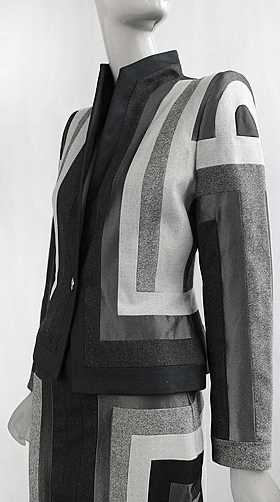
Alexander McQueen for Givenchy Autumn 1998 ‘Blade Runner‘ suit

Soon after obtaining his degree, McQueen started his own business designing clothes for women. Only four years out of design school, McQueen was named Chief Designer of Louis Vuitton-owned Givenchy, a French haute couture fashion house. Deciding to further his clothes-making career, McQueen moved on from Savile Row and began working with theatrical costume designers Angels and Bermans. The dramatic style of the clothing he made there would become a signature of his later independent design work. In 2003, McQueen was declared International Designer of the Year by the Council of Fashion Designers of America and a Commander of the Most Excellent Order of the British Empire by the Queen of England, and won yet another British Designer of the Year honor. Meanwhile, McQueen opened stores in New York, Milan, London, Las Vegas and Los Angeles. In 2007, the specter of death would come to haunt McQueen, first with the suicide of Isabella Blow. The designer dedicated his 2008 Spring/Summer line to Blow, and said that her death “was the most valuable thing I learnt in fashion.” Just two years later, on February 2, 2010, McQueen’s mother died. One day before her funeral, on February 11, 2010, McQueen was found dead in his Mayfair, London apartment. The cause of death was determined to be suicide.

The Girl Who Lived in the Tree 
Autumn/Winter 2008

Alexander McQueen played an important role in revolutionizing the vintage fashion industry. He blended avant-grade designs with historical influences, creating pieces that resonate with both contemporary and nostalgic aesthetics. He loved Victorian-era clothing and often created pieces with drama and elegance to celebrate the era. McQueen was also into creating some of the most shockingly breathtaking corsets the world has ever seen. Aside from Victorian-era garments, McQueen was fond of the 70s. Numerous suits, jackets and dresses he designed to have a 70s vibe and inspiration. This includes wide-legged pants, androgynous designer wear, especially platform shoes, leotards, fringe and short skirts. Alexander McQueen’s designs are highly sought after due to their unique blend of creativity, craftsmanship, and storytelling.

Uncategorized

History of the Capelet

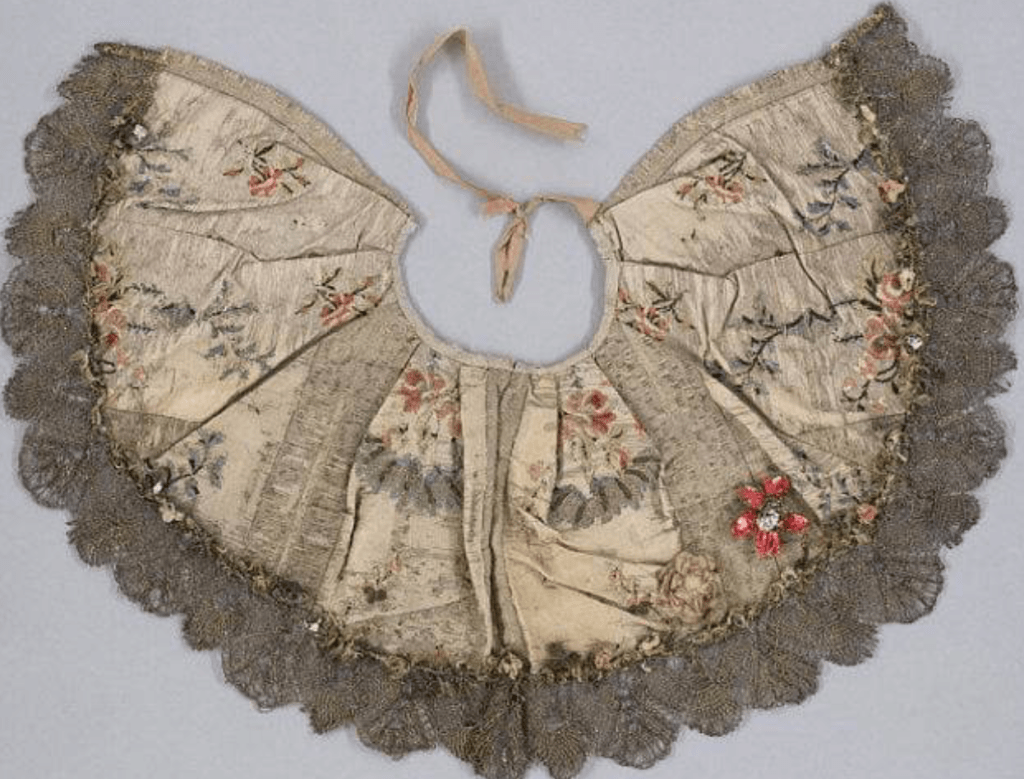
I recently bought a capelet from the 1890’s. What are capelets? The capelet is a short, often sleeveless, cape-like garment that has a rich history in fashion. The capelet has roots in medieval and Renaissance fashion, where capes and cloaks were commonly worn for warmth and as a symbol of social status. During the Victorian era (19th century), women’s fashion embraced capelets as stylish accessories, often made from luxurious fabrics and adorned with lace or fur. In the 1920s and 1930s, capelets experienced a resurgence, complementing the flapper style with their short, chic designs. The capelet gained popularity in the mid-20th century as a versatile fashion accessory, worn both casually and formally.

Capletes are also used in high fashion as well. Designers like Christian Dior incorporated capelets into their couture collections, contributing to the garment’s association with elegance and sophistication.The capelet continued to be a favored accessory in various fashion eras, adapting to changing styles and preferences.

Even though Capletes have been seen as a fashion trend of the past they are now recently making a comeback. In recent decades, the capelet has experienced a revival on fashion runways and in ready-to-wear collections. Modern designers have embraced the capelet as a statement piece, often experimenting with different fabrics, lengths, and styles.

Capelets are also valued for their versatility, offering a stylish alternative to traditional jackets or shawls. They are commonly worn as elegant cover-ups for formal occasions, adding flair to dresses or evening wear. The history of the capelet reflects its enduring appeal, seamlessly blending elements of historical fashion with contemporary style. Whether in medieval times, the glamorous 1920s, or the modern era, the capelet remains a timeless accessory appreciated for its elegance and adaptability.

The capelet I purchased was a special lot sale from Nostalgia, an excellent vintage fashion store in my neighborhood. The items were more historical nature and not their usual stock. The lot I purchased included a lace evening jacket, a pigeon breast top and skirt and a capelet all ranging from the 1890’s. My capelet is black with gathering on the shoulders. It has beaded embroidery along the edges. Unfortunately, it is too delicate to be hung so it will remain packed in an archival box. I am happy with my purchase and proud to add this capelet to my vintage fashion collection.

Uncategorized

Bonnie Cashin

An ensemble designed by Cashin in 1973 for Philip Sills & Co., on display at the Metropolitan Museum of Art exhibit, In America: A Lexicon of Fashion

Fashion Designer, Bonnie Cashin founded the leather accessories company Coach. The California-born designer got her start by making costumes for Los Angeles showgirls as a teenager. She moved to New York City soon after to design for Broadway at age 19. She continued to hone her skills as a designer working on film sets in the 1940s during the Golden Era of Hollywood. It was in the ’50s that she returned to the Big Apple to cultivate Bonnie Cashin, The Sportswear Line. Cashin was known for her innovative and functional design philosophy. Cashin designed garments in neutral earth tones, staying away from loud patterns, bold colors, or pretty pastels so often used by other designers of the era. Her designs often incorporated bold colors, leather detailing, and functional pockets. Her style lacked adornment or details so that they could be worn for the every day and not just a special occasion. However, Cashin is attributed to introducing the use of leather as a material for clothing apparel. Her love of leather led to the founding of Coach in 1962 and the release of the first “tote” bag, the Cashin-Carryall.

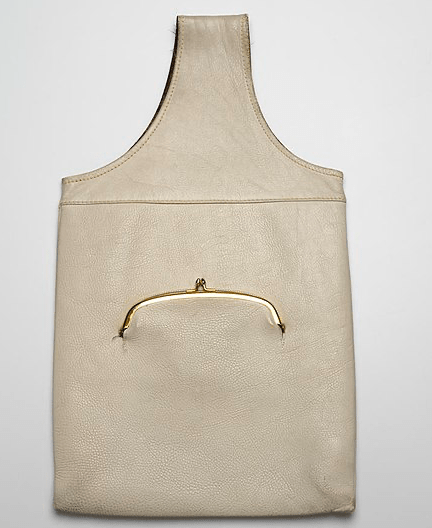
1962 ‘Cashin Carry’ bag designed for Coach, cream leather (RISD Museum)

Bonnie Cashin also played a significant role in the vintage fashion industry. Cashin popularized the concept of layered clothing, introducing the use of layering for both style and functionality. This approach had a lasting impact on fashion, influencing how individuals approached dressing and creating a distinctive look that is still relevant today. One of Cashin’s signature elements was her use of leather and metal accents in her designs. She introduced leather as a fashion material, not just for outerwear, and utilized metal fastenings and hardware creatively. This aesthetic has become iconic and is appreciated in vintage fashion. Cashin played a significant role in elevating the status of ready-to-wear clothing. She emphasized the importance of quality craftsmanship and materials in off-the-rack garments, contributing to the acceptance of ready-to-wear as a legitimate and desirable category in the fashion industry. Cashin designed a line of handbags for Coach, introducing the concept of functional and stylish handbags. Her designs, including the iconic Cashin Carry tote, reflected her emphasis on practicality without compromising on aesthetics. Vintage Cashin-designed Coach bags remain collectibles. Cashin’s influence goes beyond her designs; she is recognized as a trailblazer and a visionary in the fashion industry. Her contributions to American sportswear and her role in shaping the modern handbag have left an indelible mark on the industry. Cashin also contributed to fashion education by teaching at various institutions. Her teachings influenced a new generation of designers, contributing to a broader impact on the evolving landscape of fashion. Bonnie Cashin was influential because she made fashion more comfortable and accessible. It is the main reason her designs are highly sought after today.

Uncategorized

Isaac Mizrahi’s:Creative Spirit

A dress Mizrahi designed in 1994-95 in the Metropolitan Museum of Artexhibition, In America: A Lexicon of Fashion

This rebound fashion designer had a huge impact on the vintage fashion industry. Isaac Mizrahi was born on October 14, 1961, in Brooklyn, New York. He displayed an early interest in fashion and began sketching designs as a child. Mizrahi studied at the Parsons School of Design in New York City, where he honed his design skills and gained a strong foundation in fashion. In the late 1980s and early 1990s, Mizrahi gained recognition for his fresh and innovative designs. His early collections showcased a blend of high fashion and streetwear, earning him a reputation as a rising star in the industry. Mizrahi launched his eponymous label, Isaac Mizrahi New York, in 1987, and his ready-to-wear designs quickly gained popularity for their vibrant colors, bold patterns, and sense of humor.

Mizrahi’s impact on the vintage fashion industry is one of a kind. One of the reasons why Mizrahi’s designs are so memorable is because his designs are nostalgic to the 90’s. As a result, vintage Isaac Mizrahi pieces from this time have become sought after for their retro charm. Mizrahi is also known for his collaborations. He collaborated with Target in 2002, bringing high fashion to a mass-market audience. His collaboration made designer fashion more accessible and popularized, further boosting the appeal of vintage Isaac Mizrahi items. He is also a designer who supported the body positivity movement and made multiple designs catering to diverse body types. He was among the first designers to include plus-size models in his runway shows. His inclusive approach to fashion remains relevant in the contemporary fashion landscape. His impact on the vintage fashion industry makes his clothing highly sought after to this day.

Although he temporarily left the fashion industry in the mid-2000s, Mizrahi’s creative spirit has remained vibrant. He has ventured into various creative fields, including television, theater, and publishing, continuing to influence and inspire a new generation of designers. Isaac Mizrahi’s background in fashion education, his innovative designs in the 1990s, and his accessible collaborations have left a lasting mark on the vintage fashion industry. His vintage pieces are cherished for their vibrant and playful aesthetic, reflecting the spirit of a memorable era in fashion.

Uncategorized

Elizabeth Hawes

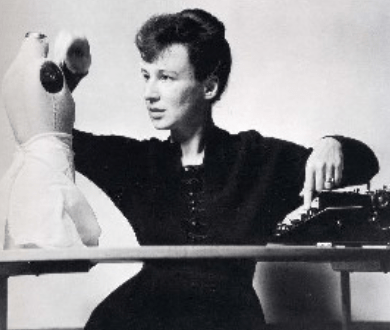
This American fashion designer and writer, made significant contributions to the fashion industry in the mid-20th century. Elizabeth Hawes was born on December 16, 1903, in Ridgewood, New Jersey, to a progressive family. Her father was an architect, and her mother was a women’s rights activist. This upbringing in an intellectually stimulating environment influenced her future career in fashion and her commitment to women’s rights.

Hawes began her fashion career as a copywriter for a New York department store. She later worked as a fashion journalist and editor, gaining insights into the fashion industry. In 1928, she established her own fashion company, Hawes, Inc., which allowed her to create designs according to her own ideals.

Hawes’ impact on the fashion industry was ground breaking. She was a strong advocate for individuality and believed in designing clothing that suited the unique personality and lifestyle of each woman. This is one of many reasons why her vintage pieces are still sought after today. She supported fashion houses that made unconventional clothing. In fact, while Elizabeth Hawes was working in Paris, she regularly wore garments from the fashion house Callot Soeurs. Hawes insisted that people should wear what they personally liked, not what was considered fashionable.

This was important because buyers at the time considered Callot Soeurs’ dresses out of date and unfashionable. However, Hawes happily wore their “simple clothes with wonderful embroidery” that lasted for several years. She was also notable for being among the many early designers to champion ready-to-wear clothing, aiming to make high-quality fashion accessible to a broader audience. Vintage Hawes ready-to-wear pieces reflect this innovative approach. Vintage Hawes pieces are appreciated for their usability and versatility. She believed in practical, functional fashion, incorporating features like pockets, removable collars, and reversible designs. These distinct features make her designs more comfy and casual. Hawes’ legacy continues to influence contemporary designers who appreciate her emphasis on individual expression and functionality in fashion. Her vintage pieces are treasured for their unique and forward-thinking design principles.

Uncategorized

Charles James: Highly Structured

Courtesy of The Metropolitan Museum of Art, Photograph by Michael A. Vaccaro
Evening gown, 1955, 
RISD Museum

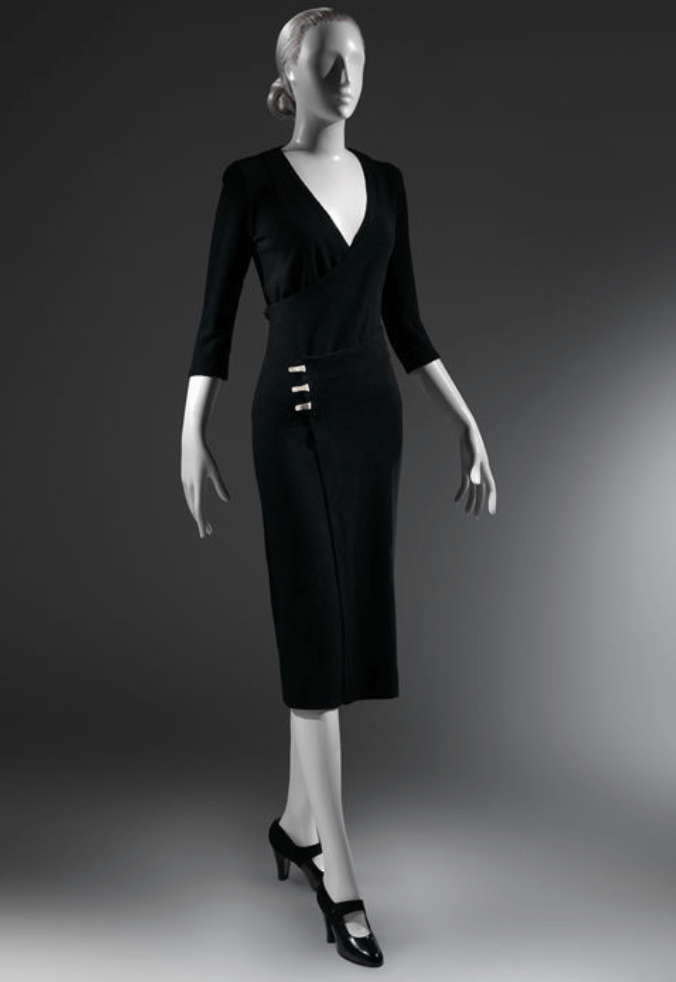
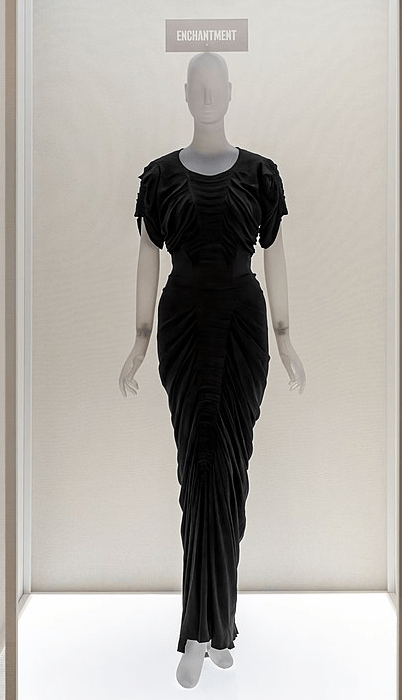
This American Fashion designer was best known for his ballgowns and highly structured aesthetic. Born in 1906, in Surrey, England, James was a British army officer and instructor at Royal Military Academy Sandhurst. His mother, Louise Enders Brega, came from a wealthy Chicago family. He was educated at the New Beacon in Sevenoaks. At the age of 19 he opened a millinery shop in Chicago in 1926, he did it under the name Charles Boucheron because his dad refused to let him use the family name. By 1930, he had designed the spiral zipped dress and the taxi dress which was given that name because it was “so easy to wear it could be slipped on in the backseat of a taxi”.

Charles James
“Taxi” Dress, ca. 1932, The Metropolitan Museum of Art, New York, Purchase,
Alan W. Kornberg Gift, 2013 

From New York, James moved to London, setting up shop in Mayfair. It was there, that he designed wedding dresses. James created a modern interpretation of the white wedding dress, with a raised neckline and divided train. In 1936, he established the company, Charles James London, Ltd., using his own name officially for the first time. He showed his first collection in the French capital in 1937. That same year, he created a one-of-a-kind white satin quilted jacket described by Salvador Dali as “the first soft sculpture”. James moved permanently to New York in 1939 where he established Charles James, Inc. At the end of the Second World War he designed a clothing line for Elizabeth Arden. He died at 72, from pneumonia in 1978.

James’ “La Sirene” dress from 1941 on display at the Metropolitan Museum of Art‘s exhibition, In America: A Lexicon of Fashion

Charles James had a significant impact on the fashion industry. He was renowned for his exceptional craftsmanship and attention to detail. Many contemporary fashion designers cite Charles James as a source of inspiration. He played a significant role in redefining evening wear, by elevating it to a level of sophistication and elegance that continues to influence modern formal and red-carpet fashion. James’ designs were often described as architectural due to their sculptural shapes and precise construction. His gowns pushed the boundaries of fashion, blurring the lines between clothing and art. Vintage Charles James pieces are considered collector’s items for their artistic and structural qualities. Charles James’ impact on the vintage fashion industry is characterized by his mastery of couture, his innovative designs, and his enduring influence on contemporary fashion. His creations remain iconic in the vintage industry today and continue to be celebrated as works of art in the world of vintage fashion.

Uncategorized

Calvin Klein: Minimalist Philosophy

This fashion designer was renowned for his iconic minimalist designs. Calvin Klein was born on November 19, 1942, in the Bronx, New York City. He grew up in a middle-class Jewish family. His mother was a homemaker, and his father worked as a grocery store owner. Klein’s favorite thing to do was sketching. He would sketch redesigns of his own cloths. This sparked his early interest in fashion. Klein’s journey to becoming a designer started in 1962 when he attended the Fashion Institute of Technology in New York City. After he refined his fashion skills, he worked as an apprentice for several fashion houses. In 1968, he launched his own company with childhood friend Barry Schwartz.

He made an immense impact on the fashion industry for many reasons. He introduced a minimalist design philosophy characterized by clean lines, neutral colors, and a focus on simplicity. His designs were a stark departure from the elaborate styles of the 1970s. Klein is credited with popularizing designer jeans in the 1970s, with his iconic “Calvin Klein Jeans” line. His provocative advertising campaigns, featuring famous models and celebrities, made a lasting impression. He also introduced Calvin Klein underwear in the 1980s, with its simple, logo-branded waistband. It became a global sensation and set a new standard for underwear marketing. In addition to his denim and underwear lines, Klein developed high-end collections for men and women, solidifying his status as a top American fashion designer. He was one of the first fashion designers to openly support LGBTQ+ causes and feature openly gay models in his ad campaigns. Klein’s provocative and controversial advertising campaigns pushed boundaries and sparked discussions about sexuality, making a lasting impact on advertising in the fashion industry.

Photo by Rodrigo Santos Souza on Pexels.com

Calvin Klein’s influence on fashion lies in his ability to create timeless, modern, and accessible designs that resonate with a wide audience. His simplistic designs and advertising techniques are still used today.

Vintage fashion enthusiasts often seek out Calvin Klein pieces as a way to connect with the fashion of their youth or to explore the styles of the 70’s and 80’s. The brand’s vintage items evoke a sense of nostalgia and timeless elegance from that era. Vintage Calvin Klein pieces are not only fashion treasures but also cultural artifacts that continue to hold value and relevance.