

The next time you slip on your favorite summer sandal, you won’t take this easy style for granted as you discover its complex, historical path. The history of sandals has deep-rooted origins in a number of countries with so many variations that’s it’s hard to pin-point one single starting point.

In Greece, sandals were worn by the wealthy, leaving most people with no choice but the bare foot. As a result, Greek sandals were often worn for appearances and decorated with fancy designs. The height and color of sandals were also a representation of social class. However, for women, who were not allowed to wear more than three clothing items in a day, the choice was usually barefoot. But, when betrothed, the rule was extended to allow the bride-to-be to wear the traditional dyed white sandal. Could you limit your clothing choice to three items on any given day?

The Egyptians also used the sandal as a class divide. Wealthy leaders in the community were identified by the adornments on their sandals and while they attended to official duties, their sandals were removed and carried by servants. Later, sandals evolved in style and material and become more widely acceptable for all. As a result, sandal makers made their living meeting the supply and demand for all classes. These craftsmen created styles made from mixed animals hides with thick inner and outer soles that were sewn together with waxed thread and colored dyes made from vegetable oils. Some were also made out of papyrus, while more labor-intensive woven styles were found inside the tomb of Pharaohs like King Tut. Egyptian culture has a long, historical connection to the sandal.

In India, sandals were inspired by materials traded from many other countries and eventually became a common choice of footwear. Early on, during the Spice and Silk trade route era, sandals were made of straw and wood. They were roughly cut and held on the foot by a stub cut between the big and second toes. More elaborately cut styles were decorated with inlaid ivory and reserved for the wealthy class. Today, in rural areas, you can still find craftsmen making The Chappals, as they are called, which is a leather, t-strap style sandal.


In Japan, during the 1st century, the sandal was referred to as Zori. They were made of straw with a leather thong in between the first and second toes. They were worn with a tabi, a white cotton foot covering similar to a sock. A double soled zori was given as an engagement gift from the groom to his future bride. During the Edo period, Getas became fashionable. This wooden platform shoe was worn barefoot but included a woven tatami insole for more comfort. During the Futal Era, Samurai Soldiers wore the waraji. This special type of sandal was woven and tied according to status.

The idea of the sandal in general is to free the foot from the constraints of an enclosed shoe. This influence came from the unexpected source of author and poet, Edward Carpenter who hated normal shoes and believed that they were the same as wearing a coffin on the foot. He designed and introduced his strappy style in Britain during the Victorian era when he wrote “The Simplification of Life.” His sandal was in fact simple, but you can see from the photo he also complicated the look by wearing socks. Was he the first to make this fashion mistake? No socks with sandals please!
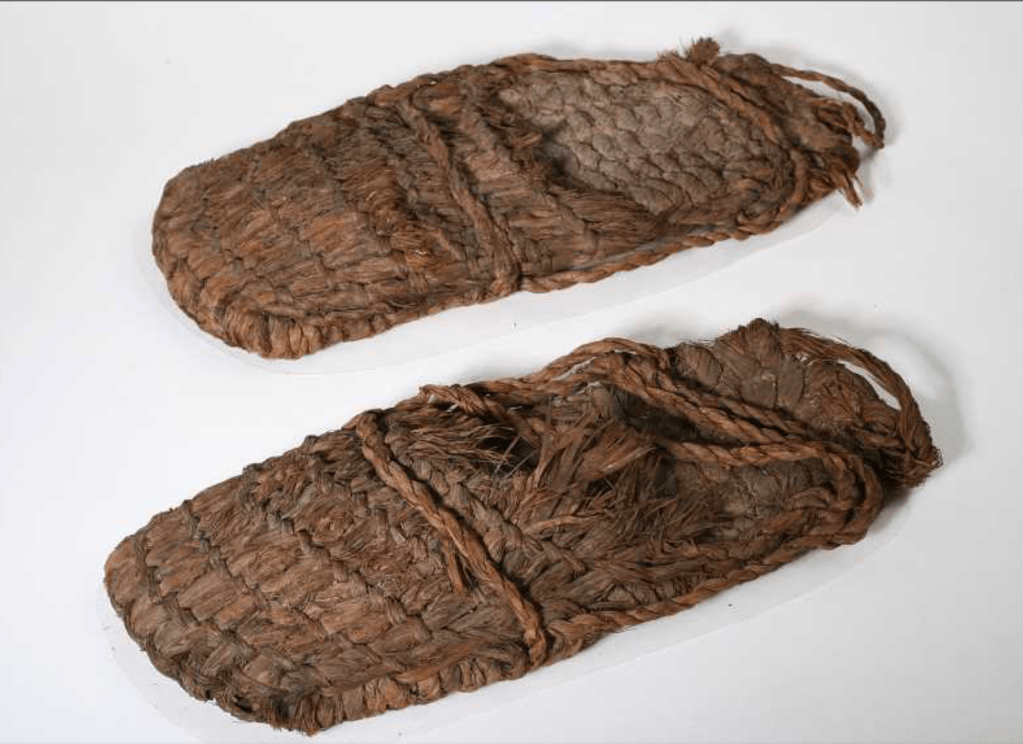
Here in the US, the earliest noted sandal dates back 10,000 years. It was made from sagebrush bark and was found in the state of Oregon. However, as with many fashion trends, the modern American sandal took it cues from Hollywood throughout the 20 th century.

The silent film era brought about many biblical themed movies. Designers such as Salvatore Ferragamo were masters at creating themed sandals for hundreds of cast members in these epic tales even though the looks were far from historically accurate. As the actresses began wearing their “bible sandals” away from the sets, the strappy sandal became a trendy new look. As films evolved into talkies and hemlines rose, Ferragamo gave the sandal a fresh look with the peek-a-boo toe and wedge heel.





















 fashionpastforward.com