

Usually, I write my blog on an article of clothing and talk about its history. Today however, I’m taking a break from my usual format to share with you my visit to the historic Biltmore Estate in North Carolina, which actually does have an interesting historical fashion angle as well as a family connection for me.
Near the turn of the last century, the Vanderbilt family hired the worlds most skilled architects to build a luxury mansion in North Carolina.


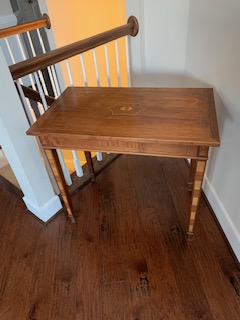
We decided to visit because my ancestor, Joseph Worrall, is said to have been one of the many carpenters hired to build this magnificent home. It is said, through family stories, that Joseph worked on the spiral staircase located in the library, which was George Vanderbilt’s favorite room. We also learned, through family stories, that Joseph made chairs and tables for the workers to rest and eat lunch during the construction years. One of those chairs sits in the corner of our home today along with a few other pieces of his master carpentry.
Before we visited the actual mansion, we had the opportunity to view a special exhibit featured at the estate based on the hit TV show Downton Abbey. The TV series chronicles the lives and struggles of the wealthy Crawley Family and their house servants during the 1800’s and would perhaps resemble the Vanderbilt’s as well. This exhibit showed the stark contrast between the family, the servants, women and minorities during this time in history.
The focus of the exhibit was the lifestyle and history of the era which cannot overlook the fashions of the day. For fans of the show, you might recognize some of the memorable garments worn by the characters which were part of this exhibit. For me, it was a detailed look at the fashion of the day. These garments were on loan from the show, but true to the era, similar styles could have been worn by the Vanderbilt’s and their guests as well.

The exhibit began with fashions for the lady of the house. This first outfit has a blue Sunday hat, paired with a blue, embroidered, floor length dress. It was worn by Violet Crawly, who was the Matriarch of the house in the series.
In contrast, another section of the exhibit was dedicated to the servant’s required uniforms. The Head Maid and Butler were in charge of everyone and dressed accordingly. The head maid of this household has a white button-down shirt paired with a floor length skirt. To finish off the look, there was a long black overcoat with a watch in the pocket in order to check the time and make sure the other servants were where they needed to be.
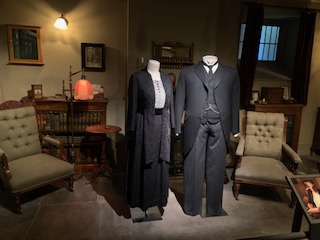
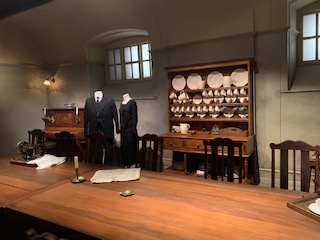
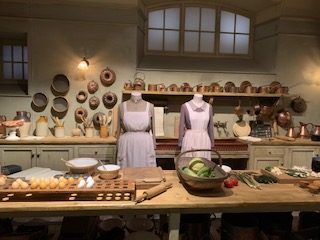
The Head Butler required a white button-down shirt with a black overcoat, black pants and a tie. He also had a watch, as promptness was expected at all times. The other servants such as the cooks and kitchen help wore simple floor length dresses with aprons tied around them because the work was fast and dirty.

Other servants were required to answer the bell board, which was kind of like a telephone room where the bells would let each servant know which room they were needed in and who was requesting a service. The female servants wore long, blue, floor length dresses with a belt around the waist and buttons on the top. The men would wear the traditional butler suit and a tie, but without the watch.
The highlight of the Downton Abbey exhibit was of course the evening dresses. During this time period, dresses had a more boyish figure to them in order to stray away from the restricting and repressive corset. This, as a result, made the older generation despise the younger generations choice in fashion. Here are a few of the dresses that we saw at the exhibit.

One of the dresses that caught my eye was a teal, long, floor length, strapless dress with white gloves. It had a matching waist band with sparkling embroidery on the top. Next was a crimson red, maxi length dress with pointy toed black shoes to match as well as black gloves. The third gown is a blue, long sleeve, maxi length dress and matching blue shoes. The accessories were a silver tiara, a silver necklace and pure white gloves. The head to toe detail of each gown with its beading and delicate fabrics shows the effort place on formal wear during that era.
We ended our visit with a tour through the actual Biltmore home. There were many rooms with amazing features but I’m sharing a few of my favorites.
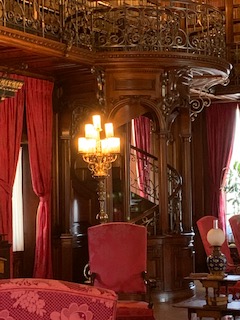
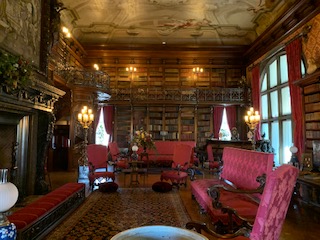
First, of course is the library which was Mr. Vanderbilt’s favorite room as well. He loved to read and had books of many languages in his collection. The staircase that my great-great- great- grandfather we believe may have had a hand in making is located there as well. It is delicately carved and leads up to the second level of the library. We just gazed at the beauty of this amazing woodwork.
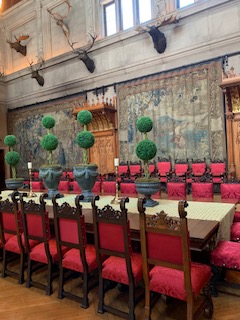
Another favorite room of mine was the dining room where the family and their guests held formal events. I could imagine them dressed in formal gowns, gloves and jewelry for dinners that would last 2-3 hours. The dinners were less about eating and more about socializing. There were often 6 courses to their meal and the dinners were all about entertaining their guests.

The next room we entered was Mr. Vanderbilt’s bedroom. The bed appeared to be small but only because it was set inside one of the biggest rooms in the home.
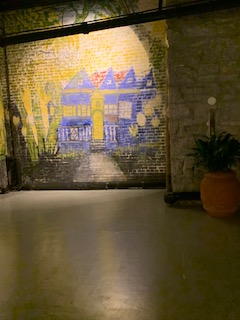
The tour ended in the Halloween room. This basement space was originally a storage room, but one night, when the Vanderbilt’s hosted a New Year’s Eve party, they invited the guests to paint the walls. They painted bats, spooky houses, and flowers but none of them were based on Halloween. In fact, they were based on songs from a popular German play of the time period. It was one of my favorite rooms.


I can understand why the history of the Biltmore is well studied. For me, the trip combined my two favorite subjects of history and fashion with a bonus family connection that made it even more interesting. I’m so glad I got to see it for myself.

 fashionpastforward.com